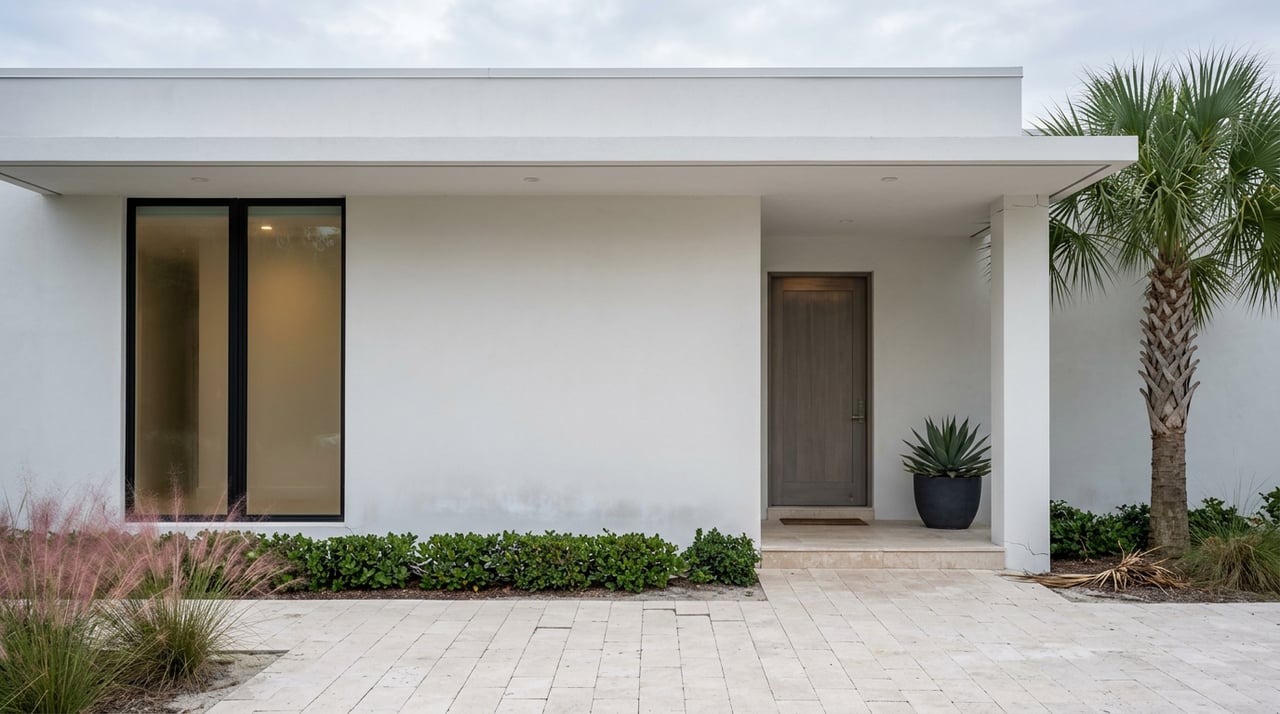
Picture two closings on the same June morning. One property sits in Seagrove Beach. The other sits four miles west in Santa Rosa Beach, inside ZIP code 32459. Both are single-family homes with a history of nightly rental income. Both buyers assume that once they sign, they can pick up where the seller left off and start collecting bookings the following week.
Neither buyer can. And because of a calendar change Walton County finalized in February 2026, the two of them are now on different clocks, with no way to predict which one clears first.
The Certificate Doesn't Come With The House
Walton County has required a Short-Term Vacation Rental Certificate for every property rented more than three times a year for stays under 30 days since the county rolled out its certification program under Ordinance 2023-03 in May 2023. What surprises a lot of sellers, and even more buyers, is that the certificate stays with the person who applied for it. It does not transfer at the closing table.
Joshua Allen, the county's Tourism and Livability Coordinator, has been explicit about this with property owners: the certificate is tied to the individual owner and the specific address it covers, and when a property sells, the new owner has to apply for their own certification before doing any rental activity. The seller's certificate, however current, becomes void the moment the deed changes hands.
That single fact reshapes how a rental-marketed 30A home should be listed, priced, and closed. A seller advertising "turnkey income" is really advertising an asset that resets to zero on the rental-compliance side every time it changes owners.
Why 2026 Split The County's Calendar In Two
Until this year, every Walton County short-term rental owner renewed on the same schedule, regardless of where their property sat. That changed on February 2, 2026, when the county aligned its local renewal cycle with the Florida Department of Business and Professional Regulation's statewide licensing cycle for District 6. Starting with the 2026-2027 renewal period, most properties in the county now renew by June 1, with the application window opening April 1.
Properties inside ZIP code 32459, which covers Santa Rosa Beach, were carved out of that change. They continue on the older cycle, which expires January 31, until the county says otherwise.
That carve-out is the detail sellers and their agents need to internalize. It means the bulk of Walton County's rental inventory, including most of 30A east of Santa Rosa Beach, now funnels its renewals and new applications toward a single date on the calendar. Santa Rosa Beach properties do not.
The Congestion Problem No One Advertises
Here is where the timing actually bites. The county has said plainly that it does not guarantee a processing timeline for new applications, because turnaround depends on how many applications are in the queue at once. If an application is incomplete, the applicant gets 45 days to fix it before an automatic denial, with no refund on the fees already paid.
Before the 2026 calendar change, that variable queue was spread across the year. Now, for every property outside Santa Rosa Beach, the busiest season for new-owner applications, spring and early summer closings, lines up directly with the busiest season for existing-owner renewals, since both now cluster around the same April 1 to June 1 window. A buyer closing on a non-32459 property in May is submitting a first-time application into the same processing pipeline as thousands of existing owners racing to renew before June 1. A buyer closing on a Santa Rosa Beach property in May faces a completely different queue, one still centered on the January 31 deadline months earlier.
Neither buyer knows in advance how long their file will sit. What has changed is that for most of the county, the odds of landing in the system's busiest stretch just went up, and it went up specifically because the county consolidated a calendar that used to be more evenly distributed.
The stakes for guessing wrong are not small. The fee to hold a certificate is modest, $300 a year for an individual owner or $227 for owners in a registered community, but operating or advertising without one carries a fine of $500 per day. County enforcement has also shifted in 2026 from issuing warnings to pursuing active legal proceedings against non-compliant owners. A buyer tempted to list a property on a booking platform while their application sits in review is taking on real exposure, not a technicality.
The HOA Rulebook Sits On Top Of The County One
Clearing the county's process is only half the diligence. Walton County's certificate confirms compliance with the county's own standards. It says nothing about what a homeowners association will allow, and on 30A, HOA rental policy varies block by block, sometimes phase by phase within the same community.
WaterColor is the clearest example. Phases 1 through 4 permit short-term rentals under the community's rules. Phase 5, known as the Park District, does not allow them at all, because that section of the community was built out specifically as a lower-turnover, primary and second-home enclave. A buyer who assumes "WaterColor allows rentals" without checking which phase a listing sits in can end up with a property that will never legally produce nightly income, no matter how clean the county paperwork is.
Other 30A communities go further and prohibit short-term rentals entirely, regardless of phase. Gated, gulf-front enclaves like Bannerman Beach and The Retreat near Grayton Beach and Blue Mountain Beach, along with smaller pockets like Jasmine Dunes, Camp Creek Point, and Sand Cliffs on the Gulf, restrict rentals to protect a quieter, more residential feel. Some of these communities allow long-term leasing of three months or more but nothing shorter. A seller marketing rental income in one of these neighborhoods, or a buyer assuming they can replicate it, is working from an assumption the HOA documents will not support.
What This Means At The Closing Table
For sellers, the practical move is to stop treating the rental certificate as part of the property's value proposition and start treating it as a disclosure item. Provide the buyer's team with copies of the current DBPR license, the Florida Department of Revenue registration, the Walton County Tourist Development Tax account, and the property's existing floor plan sketches used in the last certificate application. None of these transfer automatically, but having them on hand shortens the time it takes a buyer's own application to move from incomplete to accepted.
For buyers, the due diligence list looks like this before signing anything:
- Confirm the property's ZIP code and which renewal cycle applies, since 32459 properties and non-32459 properties are now on different calendars.
- Ask the HOA directly, in writing, whether short-term rentals are permitted for this specific phase or section, not just the community as a whole.
- Budget for a period after closing when the property cannot legally be advertised or rented, and treat that gap as a cost of acquisition rather than a surprise.
- Start your own DBPR license and Walton County certificate applications as soon as you are the recorded owner, since neither can be finalized in your name until the deed transfers.
- Keep the seller's compliance paperwork as a reference packet, even though it does not transfer, because it speeds up your own filing.
None of this changes whether 30A remains a strong place to buy a rental property. It changes how a purchase should be timed and priced when rental income is part of the pitch. A buyer, seller, and agent who plan the closing date around the certificate process, rather than around the mortgage alone, avoid the dark period where a beautiful, rental-ready home sits empty because the paperwork hasn't caught up with the sale.
FAQ
Does a new owner need a new certificate even if they keep the same property manager? Yes. The certificate is tied to the owner of record and the property, not to the management company. A new owner starts the application from scratch regardless of who is running the property day to day.
Can a buyer apply for the certificate before closing, to avoid the gap? Not in practice. Both the state DBPR license and the county certificate require the applicant to certify as the property owner, so neither can be completed until the deed is recorded in the new owner's name.
Does this affect condos on 30A the same way? No. Walton County's Ordinance 2023-03 excludes condominiums from this individual certification process, since they fall under separate requirements in Florida Statutes Chapters 509 and 718. This friction is specific to single-family and townhome-style rentals, which make up a large share of 30A's inventory outside the gulf-front condo towers.
What happens if a buyer starts renting before their certificate is approved? They are exposed to fines of up to $500 per day, and the county has moved in 2026 from issuing warnings to pursuing legal action against non-compliant operators. Waiting for approval, even when it is slow, costs far less than operating without one.
If you are weighing a purchase or a sale of a 30A rental property and want the closing date, the paperwork, and the HOA rules lined up before you sign, The Marie Babin Team has spent years walking Emerald Coast buyers and sellers through exactly this kind of timing. Connect with our Coastal Experts before you set a closing date, not after.